IP in CIDR Checker
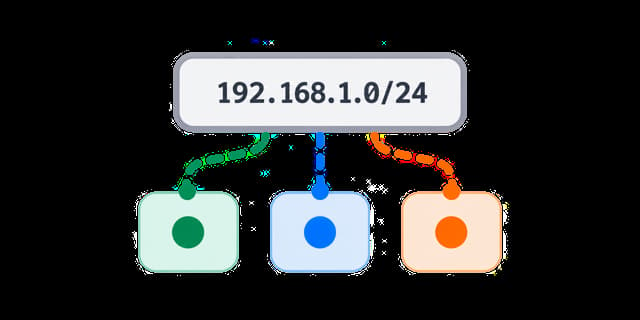
Check whether one address is inside a CIDR block. IPv4 and IPv6 are handled separately, and a mixed pair is rejected. The network is normalized first, so 192.168.1.50/24 is the same block as 192.168.1.0/24.
How the test works
Mask both the address and the network with the prefix, then compare. If the masked values match, the address is inside. 192.168.1.10 is inside 192.168.1.0/24. 192.168.2.10 is not, because the third octet differs inside the network portion.
The check is yes or no for the one block you typed. 10.1.2.3 is inside 10.0.0.0/8, inside 10.1.0.0/16, and inside 10.1.2.0/24. A router picks the longest of those matches. This page does not. If you need to know whether two of those blocks collide, use the overlap checker.
Questions
Yes. Membership is about the prefix, not about whether the address is a usable host. 192.168.1.0 is inside 192.168.1.0/24.
No. The families are not comparable. Enter an IPv6 network such as 2001:db8::/32 for an IPv6 address.
Yes. 192.168.1.255 is inside 192.168.1.0/24. Membership is not a usable-host test. The broadcast is still part of the prefix.
No. A /25 splits a /24 in half. 192.168.1.0/25 ends at 192.168.1.127. 192.168.1.200 is in 192.168.1.128/25.
Sources
Reviewed 8 October 2026. The methodology page records what these labels do not cover.
Related tools
- CIDR Overlap CheckerSee which networks match, nest, or sit apart.
- Subnet CalculatorNetwork, broadcast, mask, and usable hosts for an IPv4 address and prefix.
- CIDR CalculatorStart from CIDR notation and see the exact block it names.
- IPv6 Subnet CalculatorPrefix, compressed form, and the exact IPv6 range.