Subnet Splitter
Divide one IPv4 network into equal smaller subnets. Each child starts on its own boundary, and the children cover the parent exactly once.
How the cut is chosen
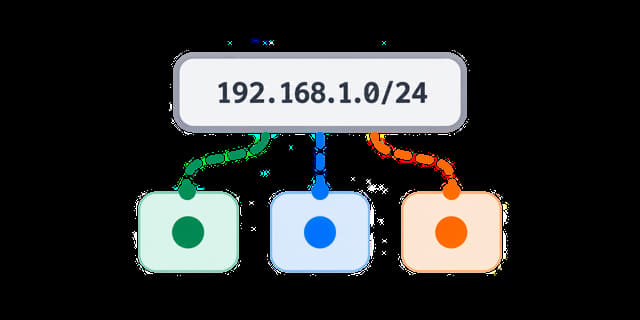
The parent is aligned to its own network address first. 192.168.1.50/24 is the block 192.168.1.0/24, then that block is walked in steps of the child size.
A new prefix of /26 has a block size of 64. The four children are 192.168.1.0/26, 192.168.1.64/26, 192.168.1.128/26, and 192.168.1.192/26.
Questions
This splitter cuts a prefix into equal longer prefixes. A /24 split into /26 produces four blocks of 64 addresses. Different sizes belong in the VLSM planner on the subnetting guide.
256 subnets. A /16 split into /24 is the widest cut shown. A wider cut still has a correct count, and you can choose a prefix closer to the parent.
Sources
Reviewed 8 October 2026. The methodology page records what these labels do not cover.
Related tools
- Subnet CalculatorNetwork, broadcast, mask, and usable hosts for an IPv4 address and prefix.
- Subnet MergerFind the smallest subnet that contains multiple networks.
- IP Range CalculatorInclusive block bounds, then the usable host range.
- CIDR CalculatorStart from CIDR notation and see the exact block it names.