IP Address Converter
Turn one IPv4 address into dotted decimal, a 32-bit integer, binary, hexadecimal, and CIDR notation. Paste any of those forms in the address field.
What each field is
The integer is the 32-bit value, from 0 through 4294967295. Hex is that same value, eight digits.
Binary is shown in four groups of eight so it lines up with the octets. CIDR is the dotted address plus the prefix you chose. The mask and wildcard come from that prefix, not from the host bits in the address.
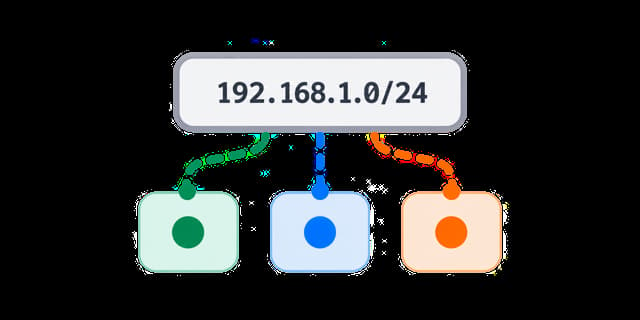
A Cisco interface wants dotted decimal and a mask. A packet dump shows the same address as the four bytes c0 a8 01 01, which is 192.168.1.1, integer 3232235777. Changing the prefix from /24 to /16 does not change that address. It changes the block the address sits in.
Questions
192.168.1.0, the integer 3232235776, 0xC0A80100, and 11000000.10101000.00000001.00000000 are one address. The prefix is separate. 192.168.1.0/24 adds the mask 255.255.255.0.
A leading zero can be read as octal. Write 10. Hex and binary have their own prefixes, 0x and 0b, so they are not dotted decimal.
No. It converts one IPv4 address. Compressed and expanded IPv6 text are on the IPv6 subnet calculator.
It is the numeric value of 192.168.1.1, read from the left octet to the right. It is not a claim about how a particular CPU stores those four bytes in memory.
Sources
Reviewed 8 October 2026. The methodology page records what these labels do not cover.
Related tools
- Subnet CalculatorNetwork, broadcast, mask, and usable hosts for an IPv4 address and prefix.
- Subnet Mask CalculatorConvert a prefix length and a dotted decimal mask.
- CIDR CalculatorStart from CIDR notation and see the exact block it names.
- IPv6 Subnet CalculatorPrefix, compressed form, and the exact IPv6 range.